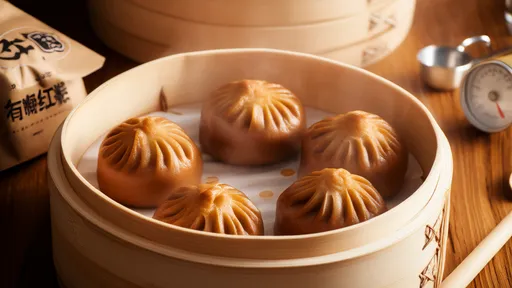
The art of crafting perfectly fluffy brown sugar steamed buns lies in mastering two critical elements: precise yeast measurement and the delicate control of secondary proofing temperature. These factors, often overlooked by home bakers, separate dense, collapsed buns from those with pillowy-soft textures and beautifully domed tops. Professional Chinese pastry chefs guard these secrets closely, but through careful experimentation and traditional wisdom, we can unravel the science behind these golden-brown delights.
Yeast behaves differently in brown sugar dough compared to plain flour mixtures. The molasses-rich sugar creates an acidic environment that initially slows fermentation, yet provides abundant food for yeast colonies to thrive later. Too little yeast results in inadequate rise during steaming, while excessive amounts cause overproofing that leads to structural collapse. The sweet spot lies between 1.2% to 1.8% of flour weight when using active dry yeast, adjusted for kitchen humidity. Bakers in southern China's humid climates often reduce yeast by 0.2% compared to northern recipes to compensate for faster activation.
Secondary proofing presents greater challenges than the initial rise. Unlike oven baking where heat penetrates gradually, the sudden steam blast requires perfectly timed dough development. The ideal temperature range of 38-42°C (100-107°F) maintains yeast activity without killing the microorganisms. Professional kitchens use bamboo steamers over warm water baths to create this microenvironment, while home bakers can achieve similar results by placing dough in a turned-off oven with a bowl of hot water. This stage typically lasts 15-20 minutes, until the dough springs back slowly when gently pressed.
Seasonal adjustments prove crucial for consistent results. Winter baking may require warming the flour slightly and extending secondary proofing by 5 minutes, while summer demands cooler liquids and possibly reducing yeast by 0.1%. The dough's appearance provides visual cues - properly proofed brown sugar dough develops a distinctive glossy sheen and faint alcoholic aroma. Overproofed dough becomes sticky and develops large bubbles that weaken the structure, while underproofed dough remains dense with poor volume.
Steaming technique completes the process. Rapid boiling water creates necessary steam pressure, but too vigorous boiling can cause temperature fluctuations that lead to collapse. Maintaining medium-high heat for the first 5 minutes allows gradual expansion before reducing to medium. The traditional three-finger gap between steamer layers ensures proper steam circulation, a technique perfected by dim sum masters. Never peek during the first 10 minutes of steaming - sudden temperature drops interrupt the crucial gelatinization of starches that sets the bun's structure.
The unique caramelization of brown sugar contributes both flavor and structural benefits. Melanoidins formed during steaming strengthen the gluten network while providing that signature golden hue. This explains why brown sugar buns often hold shape better than their white sugar counterparts when proper techniques are followed. The sugar's natural acidity also prolongs shelf life, keeping buns soft for up to three days when stored properly in breathable containers.
Advanced bakers experiment with hybrid leavening systems, combining yeast with tiny amounts of baking powder (0.5% of flour weight) to ensure consistent rise. This professional trick compensates for potential yeast variability, especially when using natural brown sugar with fluctuating mineral content. The baking powder's second activation during steaming provides extra insurance against collapse without altering flavor.
Temperature shock prevention forms the final safeguard. Gradual cooling by leaving buns in the turned-off steamer for 3 minutes before uncovering prevents sudden contraction. Using lukewarm (not cold) water for steaming avoids thermal shock to the dough. These subtle techniques, passed down through generations of bun masters, make the difference between amateur and professional results.
Modern food science reveals why these traditional methods work. The ideal proofing temperature coincides with yeast's peak CO2 production while keeping gluten relaxed for expansion. Brown sugar's calcium, magnesium and potassium ions strengthen gluten bonds better than refined sugar, explaining the superior structure. Steam baking's 100% humidity keeps dough surfaces elastic longer than dry oven heat, allowing maximum expansion before crust formation.
Mastering these variables transforms brown sugar buns from occasional successes to guaranteed perfection. While requiring more attention than Western baking, the rewards justify the effort - steaming baskets filled with fragrant, cloud-like buns that retain their plump contours for hours. This knowledge represents the intersection of culinary tradition and biochemical understanding, where ancient techniques align perfectly with modern food science principles.
By /Jun 18, 2025
By /Jun 18, 2025
By /Jun 18, 2025
By /Jun 18, 2025
By /Jun 18, 2025
By /Jun 18, 2025
By /Jun 18, 2025
By /Jun 18, 2025
By /Jun 18, 2025
By /Jun 18, 2025

By /Jun 18, 2025
By /Jun 18, 2025

By /Jun 18, 2025

By /Jun 18, 2025
By /Jun 18, 2025

By /Jun 18, 2025