Microbial Community Functions in Ecosystems: The Invisible Metabolic Engines in Soil and Gut

Jun 19, 2025 By

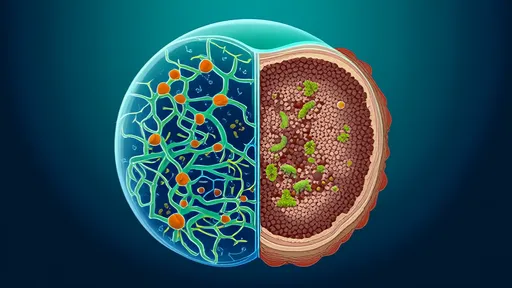
The unseen metabolic engines of our planet operate in the most unexpected places—beneath our feet and within our bodies. Soil and gut microbiomes, though separated by scale and environment, share striking functional parallels that drive essential biochemical processes. These microbial communities don’t just coexist with their hosts or environments; they actively shape them through intricate metabolic networks. Scientists are only beginning to unravel how these hidden ecosystems influence everything from global carbon cycles to human immune responses.

Soil Microbiomes: The Underground Alchemists

Beneath the surface, soil microbiomes function as nature’s most sophisticated recycling plants. A single gram of fertile soil teems with billions of bacteria, fungi, and archaea, each contributing to a collective metabolic machinery. These organisms break down organic matter—dead plants, animal residues, and even rocks—transforming them into nutrients that sustain entire ecosystems. The nitrogen-fixing rhizobia in plant roots, for instance, convert atmospheric nitrogen into ammonia, a form usable by plants. Without this invisible labor, agricultural systems would collapse, and forests would starve.

But their role extends beyond decomposition. Soil microbes produce bioactive compounds like antibiotics and enzymes that influence plant health and even atmospheric chemistry. Recent studies reveal how certain bacterial species generate volatile organic compounds (VOCs) that trigger raincloud formation—a literal example of microbes shaping climate. The metabolic versatility of soil microbiomes makes them indispensable to ecological stability, yet vulnerable to disruptions like industrial farming or pollution.

Gut Microbiomes: The Internal Fermentation Vats

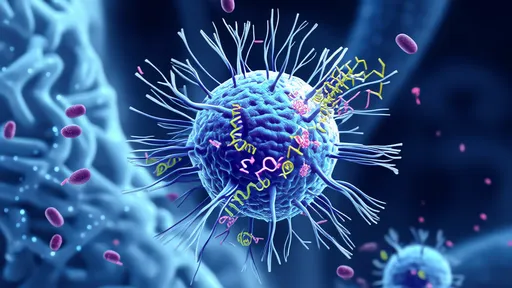
Meanwhile, within the human gut, a similarly dynamic microbial community orchestrates metabolic processes that our own cells cannot. The gut microbiome acts as a biochemical refinery, fermenting indigestible fibers into short-chain fatty acids (SCFAs) like butyrate—a primary energy source for colon cells and a regulator of inflammation. These microbial metabolites don’t just aid digestion; they modulate immune responses, influence neurotransmitter production, and even cross the blood-brain barrier.

The parallels with soil microbiomes are uncanny. Both systems rely on symbiotic relationships where microbes derive sustenance from their host (whether soil or intestine) while providing essential services in return. In the gut, Bacteroides species break down complex polysaccharides, much like cellulolytic bacteria degrade plant matter in soil. The byproducts of these reactions—whether SCFAs in guts or humic acids in soil—have cascading effects on their larger ecosystems.

Cross-Kingdom Metabolic Conversations

What fascinates researchers is the overlap in microbial functions across these disparate environments. Certain soil-derived bacteria, like Lactobacillus and Bifidobacterium, are now recognized as gut probiotics, suggesting an evolutionary kinship between terrestrial and enteric microbes. This raises provocative questions: Did early humans acquire beneficial microbes through soil exposure? Could restoring biodiversity in one system positively impact the other?

Emerging studies hint at such connections. Children raised on farms—with richer soil microbial exposure—exhibit lower rates of autoimmune disorders, possibly due to microbiome-mediated immune training. Conversely, gut microbes like E. coli can survive in soil, potentially transferring antibiotic resistance genes between ecosystems. These findings underscore how microbial metabolic networks transcend traditional boundaries.

Threats to the Invisible Workforce

Both microbiomes face unprecedented stressors. Modern agriculture’s monocultures and pesticides decimate soil diversity, while processed diets and antibiotics impoverish gut flora. The consequences are measurable: degraded soils lose carbon-sequestering capacity, and dysbiotic guts correlate with metabolic syndromes. Yet solutions may lie in their shared biology. Regenerative farming practices that rebuild soil microbiomes mirror dietary interventions like prebiotics that nourish gut microbes.

Perhaps the most revolutionary insight is that these microbial engines aren’t just passive responders but active designers of their environments. By understanding their metabolic blueprints, we might engineer healthier soils—and healthier humans—from the ground up.
Recommend Posts
Science

Microbial Community Functions in Ecosystems: The Invisible Metabolic Engines in Soil and Gut

By /Jun 19, 2025

The unseen metabolic engines of our planet operate in the most unexpected places—beneath our feet and within our bodies. Soil and gut microbiomes, though separated by scale and environment, share striking functional parallels that drive essential biochemical processes. These microbial communities don’t just coexist with their hosts or environments; they actively shape them through intricate metabolic networks. Scientists are only beginning to unravel how these hidden ecosystems influence everything from global carbon cycles to human immune responses.
Science

Quantum Nonlocality Principle: Experimental Verification of Einstein's Spooky Action at a Distance"

By /Jun 19, 2025

In the realm of quantum physics, few concepts have sparked as much debate and fascination as quantum nonlocality—the eerie phenomenon Albert Einstein famously dismissed as "spooky action at a distance." For decades, this counterintuitive idea remained a theoretical curiosity, but a series of groundbreaking experiments has since transformed it into one of the most rigorously tested principles of modern science. These experiments have not only validated the existence of nonlocal correlations between entangled particles but also reshaped our understanding of reality itself.
Science

Hydrous Dehydration in Subduction Zones: A Key Trigger for Magma Generation at Plate Boundaries

By /Jun 19, 2025

The Earth's crust is in constant motion, driven by forces deep beneath our feet. Among the most fascinating phenomena arising from this dynamic system is the generation of magma at subduction zones, where one tectonic plate slides beneath another. Recent research has shed new light on the critical role of dehydration reactions in this process, revealing how the release of water from descending slabs triggers melting and ultimately fuels volcanic activity along plate boundaries.
Science

Neuro-Immune Interaction: Signaling Dialogue Between the Central Nervous System and the Immune System

By /Jun 19, 2025

For decades, the central nervous system (CNS) and immune system were studied as separate entities, operating in isolation with distinct functions. The brain was considered an immunologically privileged site, shielded by the blood-brain barrier, while the immune system patrolled the periphery. However, groundbreaking research over the past two decades has shattered this dogma, revealing an astonishingly sophisticated bidirectional communication network that fundamentally links neural circuits with immune responses.
Science

Metal Nanocatalysis Surface Reconstruction: Atomic Layer Dynamic Reorganization in Catalytic Reactions

By /Jun 19, 2025

The field of nanocatalysis has witnessed a paradigm shift in recent years with the growing recognition of dynamic surface reconstruction in metal nanoparticles during catalytic processes. Unlike traditional views that treated catalysts as static entities, cutting-edge research now reveals that catalytic surfaces undergo continuous atomic-scale rearrangements under reaction conditions. These reconstructions, far from being mere structural curiosities, often dictate the activity, selectivity, and stability of catalytic systems.
Science

Complexity of Ecosystem Food Webs: Cascading Effects of Species Interactions at the Network Level

By /Jun 19, 2025

The intricate dance of life within ecosystems is governed by a complex web of interactions, where each species plays a role in maintaining the delicate balance of nature. The concept of food web complexity delves into the myriad ways species are interconnected, creating a network of dependencies that can ripple through an ecosystem with cascading effects. These interactions are not merely linear chains of predator and prey but form a multidimensional tapestry that defines the stability and resilience of ecological communities.
Science

Quantum Topological Phase Transitions: Quantum State Transitions of Material Topological Properties

By /Jun 19, 2025

The study of quantum topological phase transitions represents one of the most exciting frontiers in condensed matter physics today. These transitions describe the abrupt changes in a material's topological properties driven by quantum fluctuations, often leading to the emergence of exotic states of matter. Unlike classical phase transitions, which are governed by thermal fluctuations, quantum topological phase transitions occur at absolute zero temperature, where quantum mechanics reigns supreme.
Science

Isotopic Fractionation in Geology: The Selective Distribution Law of Isotopes in Chemical Reactions

By /Jun 19, 2025

The Earth's crust whispers its history through the language of isotopes. Among the most fascinating phenomena in geochemistry is isotopic fractionation—the subtle but measurable preference of chemical reactions and physical processes for one isotope over another. This natural selectivity, often operating at the thousandth-percent level, provides scientists with a powerful tool for decoding planetary evolution, climate history, and even the origins of life.
Science

The Mystery of Dark Energy: The Unknown Force Driving the Accelerated Expansion of the Universe

By /Jun 19, 2025

The universe is expanding at an accelerating rate, a discovery that shook the foundations of cosmology when it was first confirmed in the late 1990s. This unexpected phenomenon defied the long-held assumption that gravity, acting on all matter in the cosmos, would eventually slow down the expansion. Instead, observations of distant supernovae revealed that something far more mysterious was at work—an unseen force pushing galaxies apart at ever-increasing speeds. Scientists dubbed this enigmatic influence dark energy, a placeholder name that underscores how little we truly understand about it.
Science

Paleoclimatic Reconstruction: Environmental Historical Archives in Ice Cores and Tree Rings

By /Jun 19, 2025

The Earth's climate history is etched into natural archives like ice cores and tree rings, offering scientists a window into past environmental conditions. These geological and biological records serve as time capsules, preserving intricate details about atmospheric composition, temperature fluctuations, and ecological changes over millennia. Unlike written historical records, these natural archives provide continuous, physical evidence that helps researchers reconstruct ancient climates with remarkable precision.
Science

Semiconductor Heterojunction Lasers: Light Emitting Devices Enabled by Bandgap Engineering

By /Jun 19, 2025

The development of semiconductor heterojunction lasers represents a pivotal advancement in optoelectronics, merging the principles of quantum mechanics with materials science to create highly efficient light-emitting devices. These lasers leverage carefully engineered heterostructures—interfaces between dissimilar semiconductors—to confine charge carriers and photons, enabling stimulated emission with remarkable precision. Unlike conventional homojunction lasers, heterojunction designs exploit abrupt changes in bandgap energy to form potential barriers that dramatically improve performance.
Science

Ecosystem Resilience Theory: Mechanisms of Community Resistance and Recovery from Disturbances

By /Jun 19, 2025

In the face of increasing environmental pressures—from climate change to human encroachment—the concept of ecosystem resilience has gained prominence in ecological research. At its core, resilience refers to a system's ability to absorb disturbances while maintaining its fundamental structure and function. For biological communities, this translates into a complex interplay of species interactions, genetic diversity, and adaptive capacities that collectively determine how ecosystems rebound from shocks.
Science

Quantum Field Theory Renormalization: Mathematical Methods for Eliminating Divergent Problems in Physical Theories

By /Jun 19, 2025

The development of quantum field theory in the mid-20th century brought with it both profound insights and perplexing mathematical challenges. Among these challenges, none proved more stubborn than the appearance of infinities in physical calculations - results that suggested particles should have infinite energy or interact with infinite strength. The mathematical technique that rescued quantum field theory from this crisis became known as renormalization, a subtle and often misunderstood procedure that remains fundamental to our understanding of particle physics.
Science

Magnetic Stratigraphy for Global Stratigraphic Correlation: The Time Link for Global Stratigraphic Synchronization

By /Jun 19, 2025

The Earth's magnetic field has left an indelible imprint on our planet's geological record - a fingerprint that scientists now use to synchronize rock layers across continents and oceans. This paleomagnetic signature, locked into minerals as they formed millions of years ago, provides what many consider the most precise method for global stratigraphic correlation.
Science

Neuroepigenetics: Mechanisms of Environmental Regulation of Gene Expression in the Brain

By /Jun 19, 2025

For decades, neuroscience operated under the assumption that our genetic blueprint dictated the unchangeable fate of brain development and function. The discovery of neuroepigenetics has shattered this deterministic view, revealing an exquisite interplay between environmental cues and gene expression within our nervous system. This dynamic field demonstrates how life experiences - from the air we breathe to the stress we endure - physically reshape the way our brain's DNA expresses itself without altering the underlying genetic code.
Science

Metal-Organic Frameworks (MOFs): A New Paradigm for Molecular Design of Porous Materials

By /Jun 19, 2025

The world of porous materials has witnessed a quiet revolution over the past two decades, one that has unfolded not in industrial laboratories but in the precise realm of molecular design. Metal-organic frameworks, or MOFs as they're commonly known, represent more than just another class of materials—they embody a fundamental shift in how scientists approach the creation of functional porous structures. These crystalline networks, composed of metal ions or clusters connected by organic linkers, have rewritten the rules of material design by offering unprecedented control at the molecular level.
Science

Ecosystem Services Value: Assessing the Implicit Contributions of the Natural Environment to Humanity

By /Jun 19, 2025

The natural world operates as a silent partner in human prosperity, providing indispensable services that often go unnoticed in economic calculations. From the air we breathe to the water we drink, ecosystems perform countless functions that sustain life and enable societal development. Yet these contributions remain largely invisible in traditional markets and policy decisions, creating a dangerous disconnect between human activity and environmental health.