The Earth's crust is in constant motion, driven by forces deep beneath our feet. Among the most fascinating phenomena arising from this dynamic system is the generation of magma at subduction zones, where one tectonic plate slides beneath another. Recent research has shed new light on the critical role of dehydration reactions in this process, revealing how the release of water from descending slabs triggers melting and ultimately fuels volcanic activity along plate boundaries.
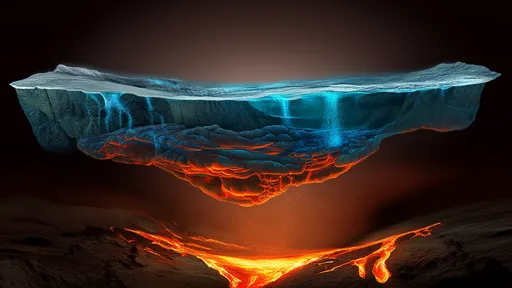
Subduction zones represent some of the most geologically active regions on our planet. As an oceanic plate descends into the mantle, it carries with it a significant amount of water trapped within hydrated minerals and porous structures. The increasing pressure and temperature conditions at depth cause these water-bearing minerals to break down in a series of metamorphic reactions. This liberation of aqueous fluids fundamentally alters the physical and chemical environment above the subducting slab.
The released fluids don't simply dissipate into the surrounding mantle. Instead, they initiate a cascade of events that lower the melting point of overlying mantle rocks through a process called flux melting. When water infiltrates the hot mantle wedge between the subducting and overriding plates, it disrupts the crystalline structure of mantle minerals. This weakening of chemical bonds allows partial melting to occur at temperatures hundreds of degrees lower than would be possible under dry conditions.
What makes this dehydration-driven melting particularly significant is its direct connection to arc volcanism. Nearly all of the world's dangerous explosive volcanoes - from the Cascades to the Andes to the Japanese archipelago - owe their existence to this fundamental process. The magma generated through slab dehydration rises through the crust, undergoing various degrees of crystallization and assimilation, before potentially erupting at the surface with dramatic consequences.
Modern geochemical techniques have allowed scientists to trace the journey of water from slab to surface with remarkable precision. Isotopic signatures in volcanic rocks reveal the complex history of fluid release and magma generation. Certain trace elements that preferentially partition into aqueous fluids serve as chemical fingerprints, demonstrating how slab-derived components become incorporated into arc magmas. These geochemical tracers show that dehydration occurs in multiple stages as the slab descends, with different mineral phases breaking down at specific pressure-temperature conditions.
The depth at which dehydration occurs appears to play a crucial role in determining the composition of resulting magmas. Shallow dehydration reactions tend to produce fluids rich in soluble elements but poor in silica, potentially leading to more mafic magmas. In contrast, deeper dehydration events release fluids that have interacted more extensively with the slab, carrying a different chemical signature that may contribute to more explosive, silica-rich eruptions at the surface.
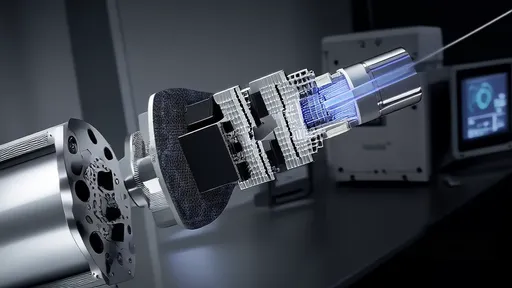
Recent advances in experimental petrology have allowed researchers to recreate subduction zone conditions in laboratory settings. By subjecting synthetic mineral assemblages to extreme pressures and temperatures while monitoring fluid release, scientists have identified key dehydration reactions that correspond to observed geophysical signals in actual subduction zones. These experiments have revealed that dehydration isn't a single, discrete event but rather occurs as a series of pulses corresponding to the breakdown of specific hydrous minerals like chlorite, lawsonite, and serpentine.
The implications of these findings extend beyond academic interest. Understanding the precise mechanisms of slab dehydration and magma generation could significantly improve volcanic hazard assessment. Many of the world's most populated regions sit adjacent to subduction zones, making the ability to anticipate changes in volcanic activity a matter of urgent practical importance. By correlating specific dehydration reactions with magma production rates, scientists may eventually develop more accurate models for predicting both the timing and character of volcanic eruptions.
Subduction zone dehydration also plays a critical role in global geochemical cycles. The process effectively acts as a giant chemical filter, separating elements that are carried into the deep mantle from those that are returned to the surface via magmatism. This continuous exchange influences everything from the composition of Earth's atmosphere to the formation of ore deposits. The water released during dehydration doesn't all make it back to the surface - some becomes incorporated into newly formed mantle minerals or remains trapped at depth, contributing to the planet's long-term water budget.
Ongoing research continues to uncover surprising complexities in subduction zone processes. Seismic imaging techniques now reveal intricate details about fluid migration pathways in the mantle wedge. Some studies suggest that fluids may accumulate in discrete pockets rather than forming continuous streams, potentially explaining observed variations in volcanic productivity along strike of individual subduction zones. Other investigations focus on how the angle and speed of subduction influence dehydration efficiency and magma generation patterns.
The story of subduction zone magmatism is ultimately a story of transformation - of water changing its physical state and chemical associations, of rocks becoming molten, and of Earth materials continuously recycling between surface and interior. As research progresses, each new discovery adds nuance to our understanding of this fundamental geological process that has shaped our planet's surface and continues to influence its evolution.
Field observations from active subduction zones provide crucial ground truth for laboratory experiments and theoretical models. In places like the Marianas or Central America, researchers can examine how variations in subduction parameters manifest in different volcanic products. These natural laboratories offer invaluable insights into how factors like slab age, subduction velocity, and overriding plate characteristics influence the dehydration-magmatism relationship.
Looking ahead, interdisciplinary approaches combining geochemistry, geophysics, and computational modeling promise to yield even deeper understanding of subduction zone processes. New analytical techniques allow for examination of smaller fluid inclusions and more precise measurement of volatile contents in minerals. Advanced numerical simulations can now incorporate increasingly realistic representations of complex, multi-phase systems. Together, these tools are helping to unravel the remaining mysteries of how water escaping from sinking slabs gives rise to Earth's most spectacular volcanic displays.
By /Jun 19, 2025

By /Jun 19, 2025
By /Jun 19, 2025

By /Jun 19, 2025
By /Jun 19, 2025

By /Jun 19, 2025

By /Jun 19, 2025
By /Jun 19, 2025

By /Jun 19, 2025
By /Jun 19, 2025
By /Jun 19, 2025

By /Jun 19, 2025

By /Jun 19, 2025
By /Jun 19, 2025

By /Jun 19, 2025

By /Jun 19, 2025

By /Jun 19, 2025